After the Last Ticket: Why Closing Time Is the Truest Equipment Inspection You'll Ever Get
Every operator knows the feeling. The dinner rush has finally drained, the dining room lights are dimming, and your kitchen crew is running on fumes. It's precisely at this hour—when a full day of service has hammered every piece of steel on the line—that your equipment tells you the truth it hid all morning.
We call it the 2 A.M. truth. And if you're not paying attention to it, you're making purchasing decisions on incomplete information.
Why End-of-Shift Performance Is the Real Spec Sheet
Manufacturer brochures describe equipment at its best: fresh out of the box, running a partial load, in a showroom with nobody breathing down its neck. But commercial kitchens don't operate in showrooms. They operate through twelve-hour days, back-to-back drops in the fryer, and grill grates that never fully cool between services.
Equipment that's genuinely built for food service duty—think heavy cast burners, welded stainless frames, and heating elements rated for continuous cycling—performs at hour eleven roughly the same as it performed at hour one. Consumer-grade lookalikes, often tempting at 40% less at restaurant supply auctions or big-box stores, reveal their lineage at closing time: sluggish recovery, inconsistent heat, and parts that rattle loose after a few weeks of real use.
Running Your Own Late-Night Stress Audit
You don't need a consultant to evaluate your line. You need one deliberate closing shift where someone documents what the kitchen looks like when it's tired. Here's how to structure it.
Step One: Measure Recovery Under Fatigue
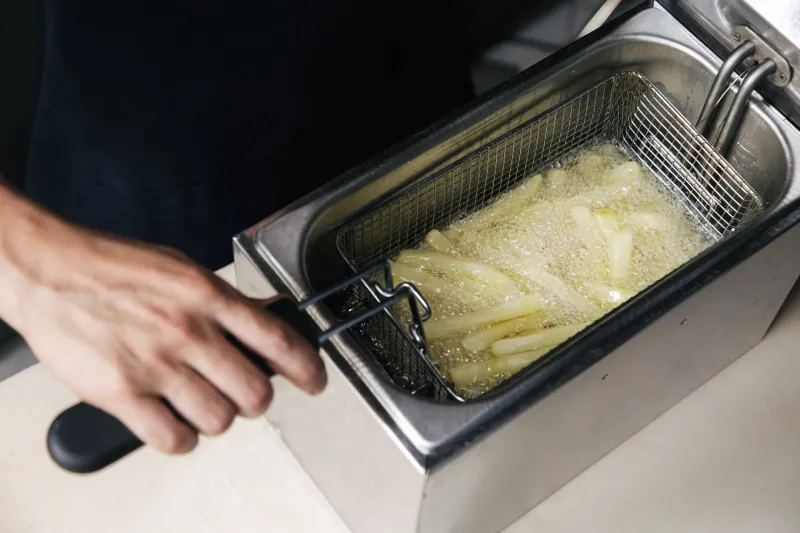
After the final orders go out, drop a full basket of frozen product into each fryer vat and time the recovery back to set temperature. A commercial-duty unit should recover within the window specified by the manufacturer—typically under a minute for high-output gas models. If a vat that recovered briskly at opening now takes noticeably longer, you're watching cumulative wear or an undersized unit that's been running at its ceiling all day.
Do the same with your flat-top: probe a few points across the griddle surface. Wide temperature deltas between the center and edges after a full service suggest thin plate steel that can't hold and redistribute heat—the signature of a unit built for weekend home cooks, not Tuesday volume.
Step Two: Audit the Cleanup Burden
Closing time is where cheap design extracts its tax. Count the minutes your crew spends disassembling, scraping, and degreasing. Units with fewer crevices, removable elements, and sloped, weld-finished surfaces should clean in a fraction of the time. If your closing crew consistently needs ninety minutes on equipment that a better-designed unit would release in thirty, you're paying wages to a design flaw every single night. Multiply that labor cost across a year and the 'bargain' appliance often turns out to be the most expensive thing on your line.
Step Three: Hunt for the Failure Points That Only Show Up Late
Fatigue exposes weaknesses. Look for:
- Loose knobs and handles that were tight at open
- Pilot lights or igniters that need a second or third try
- Door gaskets that no longer seal snugly after repeated heat cycling
- Condensation or pooling water around undercounter units
- Hot spots on exterior panels, which signal failing insulation
Any one of these is a maintenance note. Several together, on the same unit, are a replacement forecast.
The Checklist: Heavy-Duty Steel Versus Glossy Impostors
When it's time to replace what the audit flagged, use this framework to distinguish legitimate commercial equipment from consumer-grade gear dressed up in stainless:
- Certification marks. NSF, UL, or ETL listing for commercial use is non-negotiable. If a unit isn't rated for food service, it isn't food service equipment—no matter how it looks.
- Weight and gauge. Lift a door, press a countertop. Heavier gauge stainless (typically 304 grade) and substantial internal components are the honest tell of durability.
- BTU or wattage ratings relative to cavity size. Professional units deliver high output with fast recovery. Undersized elements in generous housings are a classic consumer compromise.
- Serviceability. Can a local technician get parts? Commercial lines from established manufacturers stock replacement elements, thermostats, and gaskets for years. Discontinued consumer imports become landfill the day they fail.
- Duty-cycle documentation. Reputable manufacturers publish continuous-use ratings. Consumer appliances assume intermittent duty—a difference that matters enormously in a kitchen running seven days a week.
- Warranty terms. Read what's actually covered for commercial applications. Many consumer warranties are void outright in commercial settings, which should tell you everything about how the manufacturer expects the unit to be used.
Make the Audit a Habit, Not an Event
One late-night inspection is a snapshot. Quarterly stress audits become a trendline—one that tells you which units are aging gracefully, which are coasting on borrowed time, and which deserve a place in next year's capital budget before they fail mid-rush.
Your kitchen reveals its real character when the last plate leaves the pass. Listen to what it says at closing time, and it will rarely surprise you during service.