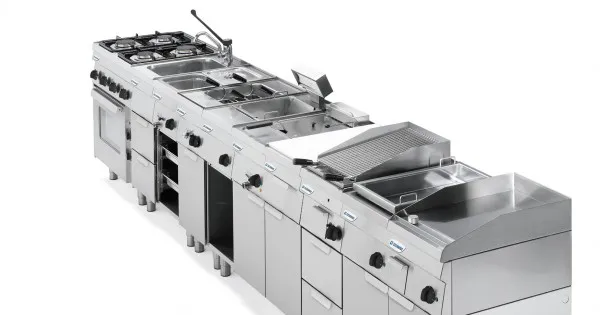
No Dining Room, No Problem: A Ghost Kitchen Operator's Guide to Smarter Equipment Choices
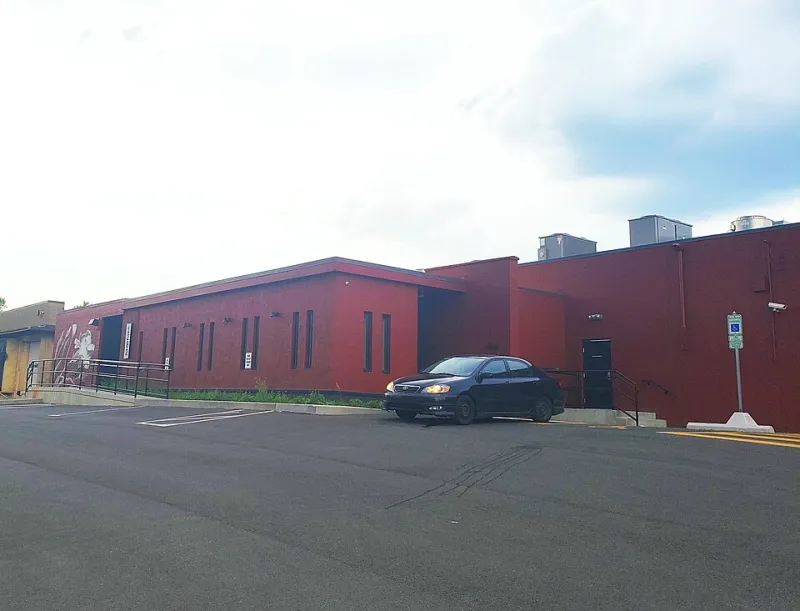
Photo: User:Jgera5, CC0, via Wikimedia Commons
The American restaurant industry has undergone a quiet structural revolution. Across cities from Chicago to Los Angeles, former warehouse bays and repurposed commercial spaces now house kitchens that serve thousands of meals per week without a single table, chair, or host stand in sight. Ghost kitchens — also called virtual restaurants or delivery-only concepts — have matured from a pandemic-era workaround into a legitimate and growing segment of the food service market.
But here is the challenge that catches many new operators off guard: the equipment playbook for a ghost kitchen is not simply a scaled-down version of a traditional restaurant setup. The operational demands are different, the bottlenecks are different, and the consequences of a wrong equipment decision are magnified by the unforgiving economics of delivery-only service. Understanding those distinctions before signing a single purchase order can mean the difference between a profitable concept and a costly lesson.
Why Ghost Kitchens Demand a Different Equipment Philosophy
A traditional restaurant kitchen is designed to support a dining experience. Equipment is selected to handle peak dinner service, accommodate a broad menu, and occasionally impress a curious guest who glimpses the line. Ghost kitchens operate under an entirely different mandate: maximum output, minimum friction, and relentless consistency across every order that leaves the building.
Without a dining room to generate revenue, every square foot of the kitchen must earn its keep. There is no front-of-house to absorb overhead. Labor is typically leaner. And because delivery platforms compress margins through commissions — often ranging from 15 to 30 percent — operators cannot afford the inefficiencies that a full-service restaurant might absorb without noticing.
This context should drive every equipment decision a ghost kitchen operator makes.
Where to Invest Premium Dollars
High-Capacity Cooking Equipment
The cooking line is not the place to economize. Ghost kitchens running high-volume, limited-menu concepts — a focused burger brand, a wing-centric virtual restaurant, a bowls concept — depend on cooking equipment that can sustain consistent output for hours without performance degradation.
Commercial fryers deserve particular attention. For concepts built around fried proteins or appetizers, a fryer that recovers temperature slowly will become the single biggest bottleneck in the operation. Heavy-duty tube fryers with high BTU ratings are the standard for serious delivery operations. Operators running multiple virtual brands out of a single kitchen should consider fryer battery configurations that allow parallel cooking without cross-contamination or flavor transfer.
Similarly, high-output convection ovens and combi ovens offer the versatility that ghost kitchen operators need when running several virtual brands simultaneously from one space. A combi oven capable of roasting, steaming, and holding at precise temperatures essentially functions as multiple pieces of equipment in one footprint — a significant advantage when square footage is at a premium.
Commercial Holding and Staging Equipment
One area that ghost kitchen operators consistently underinvimate is the holding and staging zone. In a traditional restaurant, a server retrieves a dish within minutes of plating. In a delivery operation, a completed order may sit for 10 to 20 minutes before a driver arrives. Without proper heated holding equipment, food quality degrades, customer ratings suffer, and the concept's reputation on delivery platforms erodes.
Investing in high-quality heated holding cabinets, pass-through warmers, and insulated staging areas is not optional — it is operationally essential. The best ghost kitchens treat the staging area with the same seriousness as the cooking line itself.
Ventilation and Exhaust Systems
Many ghost kitchens occupy spaces not originally designed for heavy cooking. Ensuring that the ventilation and exhaust infrastructure matches the cooking load is a non-negotiable investment. Inadequate ventilation creates safety hazards, violates health codes, and degrades the working environment — all of which ultimately affect output quality and staff retention.
Where Ghost Kitchen Operators Can Spend More Selectively
Front-of-House and Display Equipment
This one is straightforward: ghost kitchens need none of it. The capital that a traditional restaurant might allocate to display refrigeration, bar equipment, or decorative warming stations can be redirected entirely to production efficiency.
Large-Scale Dishwashing Infrastructure
Because ghost kitchens typically use disposable packaging for all outgoing orders, the volume of dishwashing is substantially lower than in a full-service environment. A well-specified undercounter or door-type commercial dishwasher is usually sufficient, rather than the conveyor systems that high-volume dine-in restaurants require.
Broad-Menu Specialized Equipment
The ghost kitchen model favors focused menus for a reason: operational complexity is the enemy of delivery speed. Operators who resist the temptation to add equipment for menu items that represent a small percentage of orders will find their kitchens faster, cleaner, and easier to staff. If a menu item requires a specialized piece of equipment used fewer than a dozen times per shift, it likely does not belong on a delivery-focused menu.
Lessons From Successful Virtual Restaurant Concepts
Some of the most operationally sophisticated ghost kitchen concepts in the US have built their equipment strategies around a simple principle: design for the constraint, not the ideal. A successful wing concept operating out of a 600-square-foot kitchen in Nashville invested heavily in a bank of high-recovery fryers and a dedicated staging area with heated holding — and deliberately kept the rest of the equipment list minimal. The result was a kitchen capable of processing over 400 orders per week with a two-person crew.
Another virtual restaurant group operating multiple brands from a single Los Angeles facility used combi ovens as the backbone of their cooking line, allowing them to rotate between a Mediterranean bowl concept and a rotisserie chicken brand without retooling the kitchen. Their equipment investment was concentrated and strategic rather than broad.
Building a Ghost Kitchen That Scales
The most important long-term consideration for ghost kitchen operators is scalability. Equipment decisions made at launch should account not only for current order volume but for what the operation looks like at two or three times that volume. Choosing commercial-grade equipment with sufficient capacity headroom — rather than buying to the exact minimum — prevents costly mid-growth equipment overhauls.
At Prathiksha Kitchen Equipments, we work with delivery-only operators to identify the specific equipment configurations that match their menu, their volume projections, and their physical footprint. The ghost kitchen model rewards precision planning, and the right equipment strategy is where that precision begins.