The Consistency Imperative: How Professional Kitchen Equipment Becomes the Foundation of Brand Trust
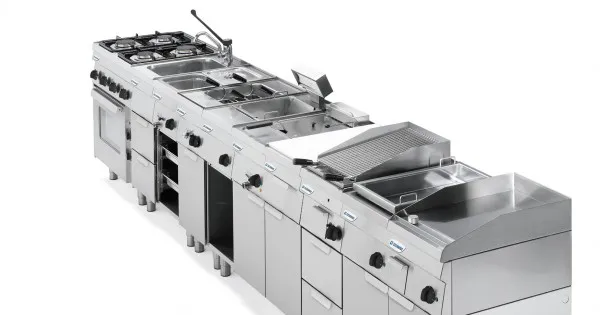
Photo: multi-unit restaurant kitchen professional equipment standardized cooking line, via www.cool-expert.co.uk
Consistency Is a Promise, Not an Accident
Brand trust in the restaurant industry is built one plate at a time. A guest who orders the same entrée on three separate visits and receives a slightly different result each time does not consciously catalog the inconsistency as an equipment problem — but they feel it. They begin to hesitate before recommending the restaurant. They choose somewhere more predictable when they want to impress a colleague or celebrate an occasion. Over time, that hesitation compounds into attrition that never appears as a line item in any financial report.
The operators who understand this dynamic most clearly are those running multiple locations, because scale makes inconsistency undeniable. When a dish performs differently across units, the question is no longer whether execution varies — it is why. And in the majority of cases, the investigation leads back to the kitchen and the tools inside it.
Equipment as the Silent Execution Partner
A well-trained culinary team is essential. But even the most skilled cooks are constrained by the capabilities of the equipment they work with. A combi oven that holds precise temperature and humidity within tight tolerances enables a cook to replicate a braised short rib or a roasted chicken with a degree of reliability that would be impossible to achieve in a conventional oven with a worn-out thermostat. A commercial flat-top griddle with consistent surface temperature distribution eliminates the hot spots that produce uneven sears and force line cooks to make judgment calls that vary by individual.
Professional-grade equipment is engineered to remove as many variables as possible from the cooking process. That is not a luxury feature — it is a fundamental operational requirement for any restaurant that intends to deliver a consistent product across hundreds of covers per week.
Chef Marcus Reyes, who oversees kitchen operations for a six-unit fast-casual concept based in Chicago, described the shift his team experienced after replacing aging, mixed-brand equipment with a standardized professional-grade package across all locations: "Before, we were training cooks to work around the equipment. Now we train them to use it. That's a completely different conversation, and the food shows it."
The Multi-Unit Challenge: Standardization at Scale
For operators managing more than one location, equipment standardization is not merely a best practice — it is a brand management strategy. When every unit runs the same model of commercial range, the same refrigeration specifications, and the same holding equipment, training becomes transferable. A cook who moves from one location to another does not need to relearn how to work around an unfamiliar piece of equipment. Recipes developed in the test kitchen perform as intended on every line.
This principle extends to the guest experience in ways that are deeply practical. A regional sandwich concept with twelve locations across the Mid-Atlantic states implemented a full equipment standardization program after discovering that bread texture varied meaningfully across units due to inconsistent proofer and oven performance. After standardization, guest satisfaction scores related to food quality rose by 14 percent across the system within two quarters. The food had not changed. The equipment's ability to execute it reliably had.
Equipment Downtime and the Customer Retention Equation
Equipment failure during service is one of the most corrosive events a restaurant can experience — not merely because of the immediate operational disruption, but because of its downstream effect on the guest relationship.
Research consistently indicates that a negative dining experience driven by service failure — including long wait times caused by equipment malfunctions, substitutions forced by unavailable cooking capacity, or quality compromises made under pressure — generates a disproportionately negative memory. Guests who experience a service failure are significantly less likely to return than guests who simply had a mediocre meal. The failure itself signals unreliability, which is antithetical to the consistency promise that brand trust depends upon.
Professional-grade equipment reduces the probability of mid-service failure in two important ways. First, it is built to withstand the thermal cycling, cleaning chemistry, and continuous operation demands of a commercial kitchen environment. Second, it is manufactured by companies that maintain robust parts availability and service networks, meaning that when maintenance is required, it can be scheduled and completed without the extended lead times that often accompany budget-tier equipment from suppliers with limited U.S. support infrastructure.
Designing for Consistency from the Ground Up
The most effective approach to equipment-driven consistency begins at the kitchen planning stage, not as an afterthought during an operational crisis. When a restaurant's equipment package is selected with the menu in mind — matching cooking technology to the specific thermal and volume requirements of each dish — the kitchen is positioned to execute reliably from opening day.
This requires a different kind of conversation between operators and equipment suppliers than a simple product catalog review. It requires an analysis of the menu's technical demands: the cooking methods involved, the throughput required during peak service, the holding and temperature management needs of each category. A kitchen designed around those answers, equipped with professional-grade tools that meet those specifications, is a kitchen built to deliver consistency as a structural feature rather than a daily aspiration.
At Prathiksha Kitchen Equipments, our approach to kitchen planning begins with exactly that conversation — understanding what an operator needs to execute before recommending a single piece of equipment. The result is a kitchen that works as a system, not a collection of individual appliances.
Trust Is Built in the Kitchen Before It Reaches the Table
Restaurant brands are built on guest perception, and guest perception is shaped by experience. But experience begins long before food reaches the dining room. It begins when a line cook activates a burner, sets a temperature, or loads a tray into a convection oven. The reliability of those actions — their repeatability across shifts, seasons, and locations — is what makes a dining experience feel trustworthy.
Professional-grade kitchen equipment is not a backstage detail. It is the operational infrastructure that makes a brand's promise achievable. Operators who recognize this invest accordingly — and their guests, even without knowing why, keep coming back.