When the Chef Walks Out the Door: Why Equipment Documentation Is the Leadership Transition Plan Most Restaurants Forget
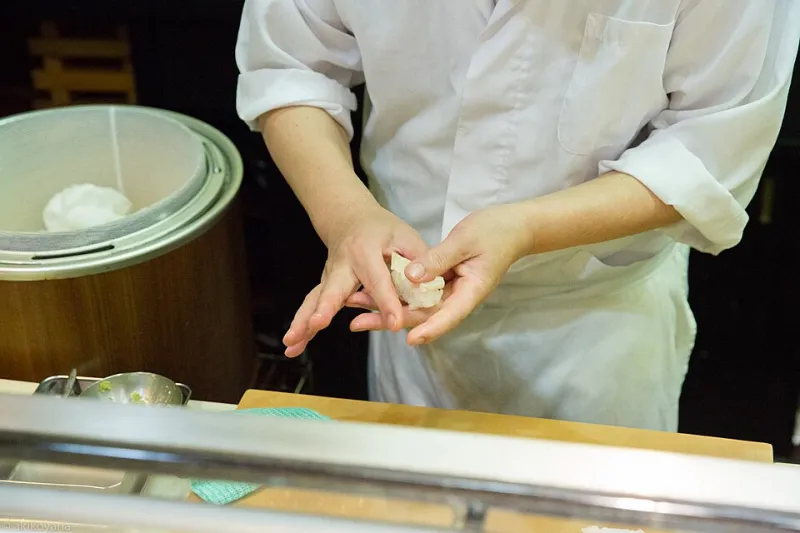
Photo: akiko yanagawa, CC BY-SA 2.0, via Wikimedia Commons
The Knowledge That Leaves With the Chef
In most independent restaurants and regional food service operations across the United States, a significant portion of operational knowledge exists in a single place: the mind of the chef-owner. They know that the convection oven on the left runs approximately twelve degrees hot. They know the commercial mixer requires a specific grease interval every ninety days or the planetary attachment develops drag. They know the walk-in condenser coil was last professionally serviced in March and is due again before summer.
None of this is written down anywhere.
When that individual transitions into an ownership or oversight role—handing day-to-day kitchen authority to an executive chef, a general manager, or an incoming partner—that accumulated knowledge does not transfer automatically. What follows is rarely a dramatic collapse. It is something quieter and more expensive: a slow erosion of operational precision, punctuated by avoidable equipment failures, inconsistent output, and a kitchen staff that no longer fully understands the tools they are working with.
This is the succession problem that commercial kitchen operators consistently underestimate.
Why Equipment Knowledge Is Institutional Knowledge
Professional-grade kitchen equipment is not intuitive in the way consumer appliances are designed to be. A high-capacity combi oven, a commercial tilting braising pan, or a multi-deck bakery oven each carries a learning curve that extends well beyond initial installation. Operators develop refined understandings of their specific units over time—how they perform under load, which settings produce optimal results for their menu, and what subtle signs precede a maintenance need.
This kind of nuanced, equipment-specific expertise is a form of institutional knowledge. It has real financial value. And like all institutional knowledge, it becomes a liability the moment it exists only in one person's head.
Consider what a new executive chef inherits when equipment documentation is absent. They receive the physical machines, but not the operational history. They may discover—through costly trial and error—that a particular gas range burner has been running slightly lean for months. They may inadvertently shorten the service life of a commercial dishwasher by continuing a chemical dilution ratio that was informally adjusted by the previous operator. They may simply fail to utilize advanced programming features on a combi oven because no one documented that those features existed, let alone how to deploy them effectively.
Every one of these gaps represents a direct cost to the business.
The Three Documentation Failures That Derail Transitions
When leadership transitions go poorly from an equipment standpoint, the breakdowns tend to cluster around three recurring failures.
The missing maintenance record. Commercial kitchen equipment operates on service cycles. Refrigeration systems require coil cleaning and refrigerant checks. Ventilation hoods must meet health code inspection requirements. Fryer oil management systems need calibration. When these histories are not formally recorded, incoming operators have no baseline. They cannot determine what is overdue, what was recently serviced, or what the equipment's failure patterns have been. They are, in effect, managing blind.
The undiscovered capability. Professional-grade equipment frequently offers functionality that operators never fully explore. A chef-owner who purchased a unit for a specific purpose may never have investigated its broader feature set. When they step back without documenting what the equipment can and cannot do, incoming leadership inherits a machine they may chronically underutilize. In a competitive restaurant market, that represents a measurable opportunity cost.
The informal workaround. Every kitchen develops informal adaptations to equipment quirks—adjustments, sequencing habits, and operational shortcuts that compensate for a unit's idiosyncrasies. These workarounds are rarely documented because they feel too minor to formalize. During a transition, however, their absence becomes significant. Incoming staff who do not know that a particular piece of equipment requires a specific warm-up sequence, or that two units should never run simultaneously on the same circuit, will learn these lessons the hard way.
Building a Documentation Framework Before the Transition Happens
The most effective equipment documentation is not assembled in the weeks before a leadership change. It is built continuously, as part of standard kitchen management practice.
A functional documentation framework begins with a complete equipment inventory that goes beyond model numbers and purchase dates. Each unit should carry a record of its installation specifications, its manufacturer service requirements, and any modifications or repairs made since installation. Service invoices, technician notes, and warranty documentation should be filed in a format that is accessible to incoming operators—not stored in an email archive that only the departing owner can access.
Beyond maintenance records, operators should document operational protocols for each major piece of equipment. This is not a reproduction of the owner's manual. It is a kitchen-specific guide that captures how the equipment is actually used in that particular operation—the settings that work, the settings that have been tested and abandoned, and the performance benchmarks that signal when a unit needs attention.
For chef-owners preparing to transition into oversight roles, a structured knowledge transfer period is worth building into the timeline. This is not simply a matter of showing the incoming chef how to operate the equipment. It is a deliberate process of externalizing institutional knowledge—converting what exists in the chef-owner's experience into documented, transferable information.
How Equipment Quality Affects the Documentation Burden
Not all equipment creates equal documentation challenges. Professional-grade commercial equipment from established manufacturers generally offers several advantages that simplify knowledge transfer. Consistent performance tolerances mean that incoming operators can rely on published specifications rather than compensating for chronic inconsistency. Robust service networks mean that maintenance records are more likely to exist in formal service logs. And equipment designed for professional environments typically includes documentation resources—technical manuals, training materials, and manufacturer support channels—that support knowledge transfer.
By contrast, operations that have built their kitchens around mismatched, aging, or consumer-grade equipment often find that informal workarounds have proliferated to the point where documentation becomes nearly impossible. The institutional knowledge required to manage that kitchen is not just deep—it is irreplaceable. Transitions become genuinely destabilizing.
Investing in professional-grade equipment with strong manufacturer support is, in part, an investment in the long-term transferability of kitchen operations. It reduces the proportion of operational knowledge that must live in any single individual's experience.
The Business Case for Treating Documentation as Infrastructure
Restaurant operators in the United States frequently treat equipment documentation as a compliance exercise—something assembled for health inspections and then filed away. The succession problem reveals a different and more compelling case for documentation: it is operational infrastructure.
A kitchen that can be handed off cleanly—where incoming leadership inherits not just equipment but the knowledge required to operate it effectively—is a more resilient business. It is better positioned to scale, to bring in outside investment, and to weather the inevitable personnel transitions that every food service operation eventually faces.
Chef-owners who have built their kitchens around professional-grade equipment and disciplined documentation practices are not just running better kitchens today. They are building operations that can outlast their own direct involvement—which is, ultimately, the definition of a sustainable business.