Powering Down Costs: How Energy-Smart Commercial Kitchen Equipment Is Reshaping Restaurant Profitability
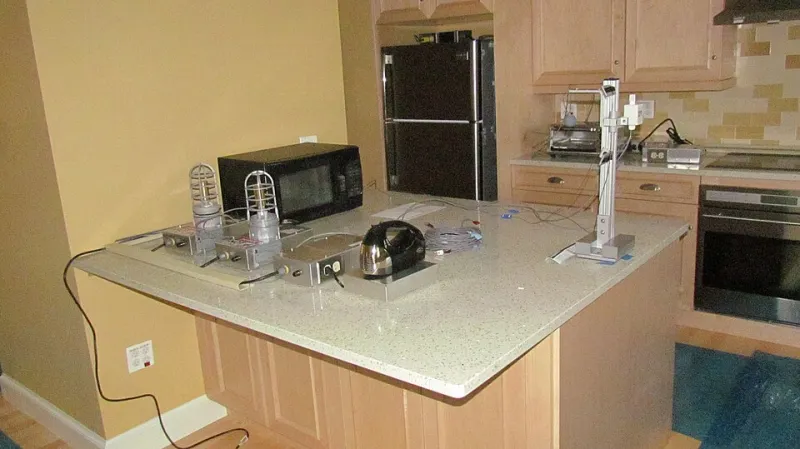
Photo: National Institute of Standards and Technology, Public domain, via Wikimedia Commons
The Utility Bill Problem No One Talks About Enough
Ask most restaurant owners about their biggest financial pressures, and they will mention food costs, labor, and rent. Utility expenses, however, frequently go under-examined despite accounting for a substantial portion of operating overhead. According to the U.S. Energy Information Administration, commercial food service facilities consume more energy per square foot than virtually any other building type. For a mid-sized full-service restaurant in the United States, annual energy expenditures can range from $20,000 to over $100,000 depending on volume, menu complexity, and equipment age.
The encouraging news is that the commercial kitchen equipment industry has undergone a quiet but consequential transformation over the past decade. Technologies that were once confined to large institutional kitchens or flagship establishments are now accessible to independent operators, fast-casual concepts, and regional chains alike. The result is a generation of equipment that performs at the highest professional standards while consuming measurably less energy than its predecessors.
Induction Cooking: Precision Meets Efficiency
Induction technology has moved well beyond the residential market. Commercial induction ranges and cooktops now represent one of the most compelling efficiency investments available to food service operators. Unlike traditional gas or electric resistance cooking, induction transfers energy directly to the cookware through electromagnetic fields, generating virtually no ambient heat loss. Studies conducted under the ENERGY STAR commercial kitchen program have demonstrated that induction units convert approximately 85 to 90 percent of consumed energy into cooking heat, compared to roughly 40 percent for open-flame gas burners.
For operators concerned about performance, modern commercial induction equipment delivers rapid temperature response, precise control, and the high-BTU equivalent output that demanding culinary applications require. Several independent restaurant groups in cities like Chicago, Denver, and Seattle have reported reducing cooking-related energy costs by 30 percent or more after transitioning line stations to induction. Beyond the utility savings, these kitchens also benefit from reduced cooling loads, since less waste heat enters the space—a secondary efficiency gain that compounds over the course of a year.
High-Efficiency Fryers: A Case Study in Targeted Savings
Fryers are among the highest energy consumers in any commercial kitchen, and they are also among the equipment categories where efficiency gains have been most dramatic. Next-generation high-efficiency fryers use advanced heat exchange systems, improved insulation, and intelligent temperature recovery controls to reduce energy consumption by 30 to 50 percent compared to standard models.
Consider a busy quick-service restaurant operating three fryers across a standard 12-hour service day. An older-generation fryer might consume 80,000 to 100,000 BTUs per hour under full operation. Replacing those units with ENERGY STAR certified alternatives can reduce consumption to 50,000 to 60,000 BTUs per hour while maintaining identical throughput and oil temperature stability. Over a single calendar year, the cumulative savings in gas or electric costs—combined with reduced oil consumption due to more stable fry temperatures—can exceed the cost difference between standard and high-efficiency models.
A regional fast-casual chain in Texas made precisely this transition across five locations in 2022. Within 18 months, the group reported average per-location utility savings of $8,400 annually on fryer-related energy alone, with full payback on the equipment premium achieved in under two years.
Smart Ventilation: The Hidden Efficiency Opportunity
Kitchen ventilation is frequently overlooked in efficiency conversations, yet HVAC and exhaust systems can account for 30 to 50 percent of a commercial kitchen's total energy use. Traditional exhaust hoods operate at fixed speeds regardless of actual cooking activity, moving large volumes of conditioned air out of the building even during slow service periods.
Demand-controlled kitchen ventilation (DCKV) systems address this inefficiency directly. By using sensors to monitor heat, smoke, and particulate levels at the hood, DCKV technology modulates fan speed in real time—running at lower capacity during prep periods and ramping up only when cooking activity demands it. The American Society of Heating, Refrigerating and Air-Conditioning Engineers (ASHRAE) has documented energy reductions of 30 to 50 percent for kitchen HVAC systems after DCKV installation.
For new construction or significant renovation projects, pairing DCKV with properly sized make-up air units and high-efficiency exhaust fans can produce a ventilation system that pays for its premium within three to four years through energy savings alone.
Navigating Rebates, Tax Incentives, and Financing Programs
One of the most underutilized resources available to US food service operators is the network of utility rebate programs and federal tax incentives that directly offset the cost of energy-efficient equipment upgrades.
Utility Rebate Programs: Most major US utilities—including Pacific Gas & Electric, Consolidated Edison, ComEd, and Xcel Energy—offer rebate programs specifically targeting commercial kitchen equipment. Rebates for ENERGY STAR certified fryers, steamers, ovens, and dishwashers commonly range from $200 to $1,500 per unit. Some programs offer additional incentives for whole-kitchen retrofits or for retiring older equipment.
Federal Tax Incentives: The Inflation Reduction Act of 2022 expanded and extended several provisions relevant to commercial operators. Section 179D of the Internal Revenue Code allows businesses to deduct the full cost of qualifying energy-efficient commercial building property in the year of installation, rather than depreciating it over time. For equipment-intensive kitchen upgrades, this provision can meaningfully accelerate the financial return on investment.
ENERGY STAR Certification as a Purchasing Filter: When evaluating equipment, ENERGY STAR certification provides a reliable, federally administered benchmark. The program's commercial kitchen specifications are regularly updated to reflect genuine performance improvements, making certification a meaningful signal rather than a marketing label.
Operators are encouraged to consult with their utility provider and a qualified tax professional before making purchasing decisions, as program eligibility and benefit levels vary by state and utility district.
Building an Efficiency Strategy, Not Just an Equipment List
The most financially successful approaches to commercial kitchen energy efficiency treat the subject as a holistic strategy rather than a series of individual equipment purchases. An operator who replaces a fryer but retains an oversized, constant-speed exhaust hood captures only a fraction of available savings. Conversely, a kitchen designed from the outset with efficiency as a guiding principle—where equipment selection, placement, ventilation sizing, and operational protocols are coordinated—can achieve reductions at the higher end of the 20 to 40 percent range.
At Prathiksha Kitchen Equipments, we work with food service operators at every scale to evaluate their current equipment profile and identify the upgrades most likely to deliver meaningful, measurable returns. The goal is not simply to sell efficient equipment; it is to help our clients build kitchens that perform better, cost less to operate, and remain competitive for years to come.
Energy efficiency is no longer a niche consideration for environmentally minded operators. It is a financial discipline—and in today's operating environment, it is one that serious restaurant businesses cannot afford to ignore.